Wednesday, February 4, 2015

Reading Response: How To Create A Mind

I am currently reading How To Create A Mind.  If it sounds like this book was written by a some crazy mad scientist to you, it is probably because it was written by a crazy mad scientist.  The author, Ray Kurzweil, has created some of the most revolutionary technologies of the 21st century such as the first omni-font optical character recognition.  He wrote this book to discuss reverse engineering the mammalian brain to create artificial intelligence.

In this book Kurzweil challenges the reader to recall a walk or, more appropriately for most of us, a drive from their day.  I know that I could hardly remember anything from my morning commute, and you probably don't remember many details either.  With this experiment he brings up a fascinating point:

The primary reason we believe that we are not conscious when under anesthesia is that we don't remember anything from this period.... So with regard to the walk I took this morning, was I not conscious during most of it?

Is this us on our commutes?
This question is slightly terrifying, but it is evokes deep thought.  That would mean millions of people drive many miles to work and school unconscious everyday.  With this question Kurzweil ultimately concludes that we do not store memories as pictures, videos or sound recordings, but rather sequences and patterns.  This serves as the basis for Kurzweil's theories describing how the human brain is actually made up of many pattern recognizers  that are constantly predicting the future.

Sunday, February 1, 2015

Multi Genre Project Proposal

For my multi genre project I would like to possibly look at the prohibition era from the moonshiner's view.  What I would really like to learn more about is the story of a poor, Georgia farmer: my grandmother's father's story.  I already know that he and his family ran moonshine and had several skirmishes with the law, but I want a better understanding of his life and other struggling farmers that turned to moon-shining and boot-legging.  Unfortunately, my great grandfather has passed, but I could still use both my grandparents and my mother as primary sources as they all often heard his stories.  

Wednesday, January 28, 2015

The Yellow Brick Road

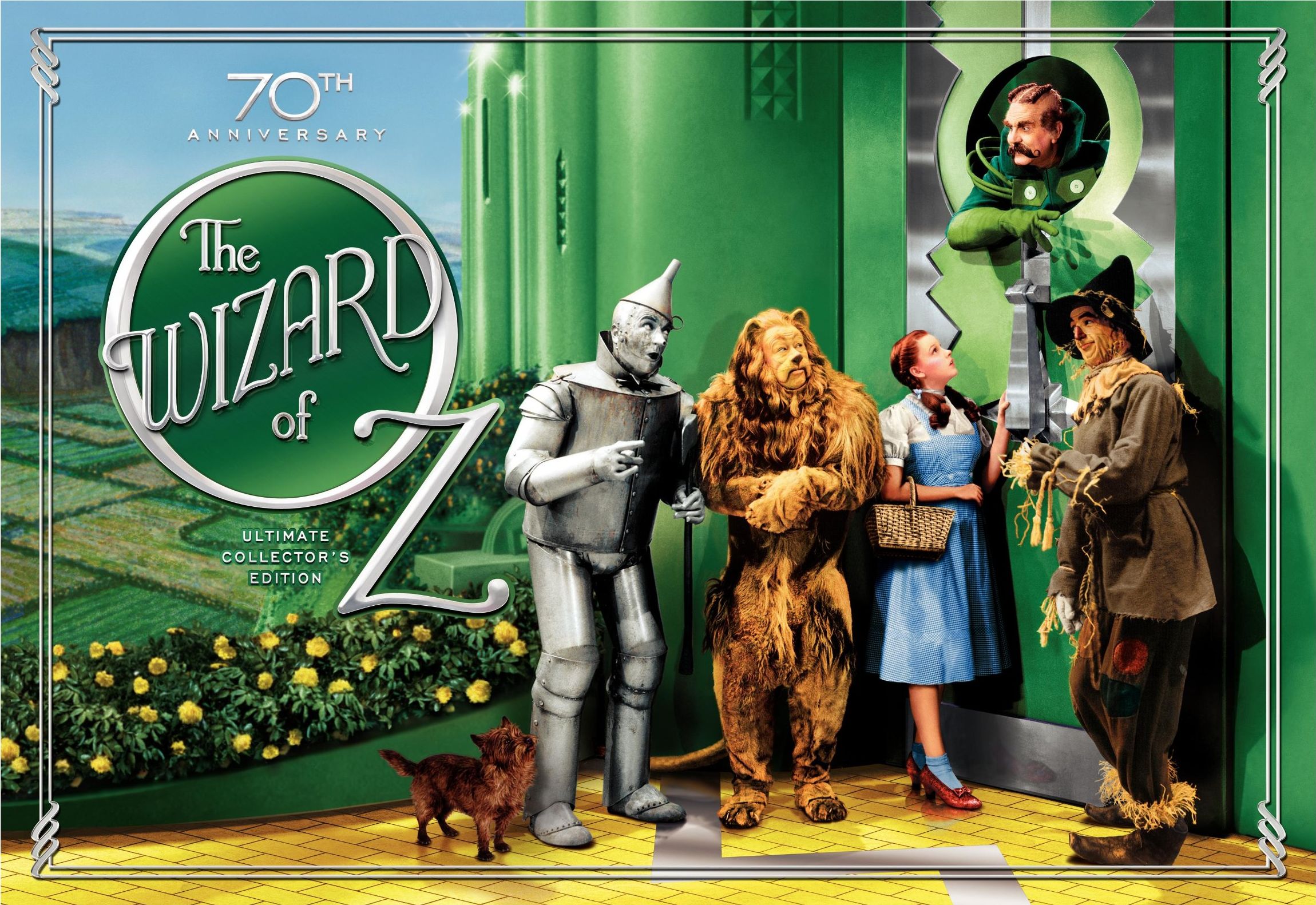
One of the multigenre papers I read was the one about The Wizard of Oz.  I thought this particular project was interesting because it included details of the making of the movie that are usually overlooked.  Specifically, it cited medical reports showing that many of the actors and actresses issues caused by the production including Dorthy's drug use and the tin man's problems caused by his aluminum paint.  It did this through records, first person narratives and pictures.

Friday, January 23, 2015

Ensuring Enviromental Sustainibility

The United Nation Millennium Development Goal that stood out to me was ensuring environmental sustainability.  I think this is an extremely important issue that is often overlooked because the impacts of ignoring the issue, while catastrophic, would be far into the future.  This goal actually encompasses many substantial goals within itself such as: improving fresh water accessibility and sanitation, decreasing biodiversity loss, and improving quality of life for those living in slums. 

While sanitation and fresh water are readily available in our community, there are still many things we can do to help our environment in virtually every other way outlined in this millennium goal.  There are the more obvious options of reducing greenhouse gas emissions by using hybrid cars, moving to biofuels, and generally just not using cars by riding bikes, walking, etc. 

Something equally important as these direct impacts on the environment is thinking about the indirect consequences of our actions.  Perhaps some of the most frightening situations are the deforestation in the amazon and the biodiversity loss associated with and without deforestation.  The world's growing demands is consequently putting pressure to clear more rainforest which houses some of the world's most important keystone species.  The world's growing demands have also caused overfishing and loss of biodiversity in the world's oceans.

Thursday, January 15, 2015

Reading Response 2

The three stories that stuck out to me were the Handprinter, TOHL, and Hungry Planet Farms.  I thought each addressed a problem in a way that hasn’t been tried before.  The first one that interested me was handprinter.org.  I had heard of your “footprint” before, but the concept of an environmental “handprint” was new to me.  This website addresses the problem of mankind’s negative affect on our ecosystem by creating, essentially, a social media website that encourages and creates a net positive impact on our ecosystem.

The second idea that caught my attention was the TOHL, or mobile infrastructure.  While the actual build wasn’t complicated at all, the idea was revolutionary.  What makes this idea so unique is that all other means of emergency water supplies require either multiple truck loads whereas this new system requires only one trip for a reliable water source that is available for as long as needed. 

The last innovation that impressed me was the Hungry Planet Farms.  The cool thing about this idea was that it combined the sustainability of a farm with the easy transportation of cargo containers.  It is the combination of these two previously uncorrelated aspects of emergency response that makes this idea great.  All three of these stories interest me because of their unique innovation.


Although I am not certain about my passion, I want to go into engineering.  If I didn’t have to worry about money I would spend my time tinkering with electronics.  The only work I would want to do is creating miscellaneous gadgets

Tuesday, January 13, 2015

Article 1 Response

After reading these grammar rules I realize that I have made several of these mistakes.  I have definitely made mistakes when it comes to parallelism, but I believe I have gotten better about using it correctly.  I also can remember frequent situations when I can’t remember if I am supposed to use sank or sunk, and miscellaneous other past and participle verb confusion.  In general, I have made mistakes when it came to each of Yogoda’s tips except for maybe the dangling modifiers.

I thought his last two tips were very interesting.  I think the author makes a good point that semicolons should be used sparingly because they are commonly misused.  I also was never taught the second correct use for the semicolon.  I also have noticed how the meaning of words is constantly changing, and I believe it is something I should take into consideration when writing; however, I though some of his examples were more acceptable then he lets on.  For example, he says: “Don't use begs the question. Instead use raises the question.”  This is a expression I commonly use, but perhaps I should consider his alternative.

Tuesday, December 16, 2014

My Pecha Kucha

 
My presentation focuses on the customs and traditions of the Chinese minorities the She and Uygur.  It shows their celebrations, languages, and beliefs through pictures of traditional foods, dress, and various other objects such as the She's phoenix totem.  Unfortunately, it will not upload because it is too big.  Here are some of the pictures it included. 

Tuesday, December 2, 2014

PechaKucha: Superior Skydiving

This PechaKucha is about a woman's experiences with skydiving.  She does a very good job of showing each of her important moments with a single picture.  The presentation was effective because each slide had a single picture, with no text, that both inspired curiosity and sufficiently depicted a moment that had significant value.  For example, the presenter's first slide was her in a graduation gown; she then explains that her first jump was a graduation present to herself.

There are a couple of ways this presentation could have been improved.  The most important thing that could be improved is that the presenter wasn't always aware of what slide she was on.  She would sometimes be talking about a slide before it appeared, or she would still be talking about the previous slide.  Sometimes the presenter would not be talking at all which significantly took away from the presentation.  In contrast, the visuals were fantastic: she included pictures of her bruised foot, her first jump, and many other pictures that clearly showed her experiences.

I think that PechaKucha can be a very effective method of presentation, however, as it is with any presentation, the subject has to interesting.  I think this particular presentation was somewhat not up to par because the topic wasn't something that has a lot to present about from this person's experiences and its presentation was weak because the speaking was off.  When the topic and speaker are on point I believe the PuchaKucha  is a very effective presentation method that will be appropriate to present my topic in ten slides.

Sunday, November 9, 2014

Who is She?

The She's phoenix totem
I was more than a little confused by both the essays I received; however, they both turned out to be very interesting.  The second one of the two described her minority’s customs and traditions.   I thought something was lost in translation when my correspondent, Evelyn, referred to her minority as feminine calling it “She”.  Regardless, I thought it was intriguing the way she referred to her culture as a minority as well as by the culture itself.

As I started to research a number of things came to my attention.  First of all, when I think of minorities I think typically of percents of population based on skin color; in China the government has recognized 55 official ethnic minorities.  Evelyn’s minority is She Zu, they are sometimes referred to as the she people.  Suddenly it made sense why Evelyn referred to her minority as she. 


The She have a number of interesting beliefs and customs.  “The She people believe in the power of ancestors and totems. “(China She Ethnic Minority: Life Style, Economy, Crafts).  Evelyn also mentioned totems in her paper saying “Our totem is a phoenix which stands for the beautiful women.”  Singing is also prevalent in the She culture and is used to find life partners.


After reading Evelyn’s essay I was confused but very curious; after researching her minority I even more curious about her minority as well as China’s 54 others.  I don’t know what my opinion is of their culture is other than it is very interesting.  I think it is slightly strange that the She choose who marry by their singing voice, but it is just a different way of living: not better or worse, just different. 

Evelyn. “My minority – “she zu”. 2014. TS. Qingdao University, n.p.

"China She Ethnic Minority: Life Style, Economy, Crafts." China She Ethnic Minority: Life Style, Economy, Crafts. N.p., n.d. Web. 09 Nov. 2014. http://www.travelchinaguide.com/intro/nationality/she/

Wednesday, October 29, 2014

Face-to-Face Response


The stories that stuck out most to me were the ones that affected especially the children of the stereotyped ethnicities.  The first of these narratives was that of Satsuki Ina.  Ina was asked to help Muslim kids who were being bullied after 9/11 because they looked like the terrorist.  This story really upset me, not only because the kids were being bullied even though they had no possible connections to the attacks, but also because the insults that were spoken against these Islamic kids came from the other kid’s parents.


Satsuki Ina had another story that was equally intriguing: her own childhood.  Being Japanese, she faced extreme prejudice herself during WWII.  She was called “a dirty Jap” as a child when she stepped out of the rain onto a porch.  I don’t understand how someone could be so hateful against a child, the characterization of innocence, because one of her ancestors lived in the same country that attacked the US at Pearl Harbor. 

Friday, October 24, 2014

Book Blog 4: The Minister's Black Veil

The Minister’s Black Veil by Nathanial Hawthorne is set in a small, old timey, American town.  Everything about this town is pretty normal until that one fateful day.  One day Reverend Hooper suddenly decided to wear a strange article of clothing: a black veil.  Prior to Parson Hooper’s sudden change of fashion he was well liked, but when he puts on that veil suddenly no one wants to be around him anymore.

“Turning his veiled face from one group to another, he paid due reverence to the hoary heads, saluted the middle aged with kind dignity as their friend and spiritual guide, greeted the young with mingled authority and love, and laid his hands on the little children's heads to bless them. Such was always his custom on the Sabbath day. Strange and bewildered looks repaid him for his courtesy. None, as on former occasions, aspired to the honor of walking by their pastor's side. Old Squire Saunders, doubtless by an accidental lapse of memory, neglected to invite Mr. Hooper to his table, where the good clergyman had been wont to bless the food, almost every Sunday since his settlement.”
 

Although this isn’t the main theme of this story, it is interesting to see how acquaintances will suddenly turn on one another with one simple change: whether the change is simply a new clothing article, or a change in personality.  In this story, the minister’s veil causes all of the people of his church to be scared of him and neglect him regardless of all traditions.  This story reflects the way people react to situations like this in real life.

Friday, October 10, 2014

Book Blog 3: Rip Van Winkle by Washington Irving

The Kaatskill Mountains
Rip Van Winkle by Washington Irving is a short story about a man who lives in a small village at the foot of the Kaatskill Mountains.  His name is, surprise, Rip Van Winkle.  Van Winkle is described as a pleasant man who is popular among the people of the village.  He is married to the woman Dame Van Winkle who abuses her husband with her sharp tongue.  Dame Van Winkle calls her husband “idle-minded” and isn’t fond of his mingling with philosophers and other so called “idle minded men”. 

One day Van Winkle goes on a squirrel hunt to get away from his wife.  This is the described scene:

Panting and fatigued, he threw himself, late in the afternoon, on a green knoll, covered with mountain herbage, that crowned the brow of a precipice.  From an opening between the trees he could overlook all the lower country for many mile of rich woodland.  He saw at a distance the lordly Hudson, far, far below him, moving on its silent but majestic course, with the reflection of a purple cloud, or the sail of a lagging bark, here and there sleeping on its glassy bosom, and at last losing itself in the blue hillside.

 Irving has an amazing ability to describe events, situations and especially landscapes.  Whether he is describing this branch of the Appalachian Mountains or if he is describing Ichabod Crane’s horseback ride in The Legend of Sleepy Hollow, Irving’s descriptions are always extremely vivid down to the tiniest details.  I have also noticed Irving’s tendency to cram an unnatural amount of clauses into a single sentence such as the third sentence in this quote describing the Hudson. 


After reading Washington Irving’s The Legend of Sleepy Hollow and now reading Rip Van Winkle Irving’s writing style continues to be pleasantly intriguing.  I wound encourage anyone who isn’t afraid of a couple of big words and intricate phrasing to read these short stories, also if you are thinking about reading Starters: don’t, read this instead. 

Thursday, September 25, 2014

Book Blog 2

For some reason that I don’t consciously understand I still am reading Starters by Lissa Price.  To my amusement I found a major plot hole. 

            To start off the only mentionable development since my last post is that renters will be able to permanently take over a starter’s body.  This led to my realization of a plot hole that compromises virtually the entire plot of the book.  I realized the plot hole when Callie, a teen, is explaining to a 'ender' how taking another person’s body is murder. 


“Oh dear.”  Madison slumped back on the couch.  “That sounds so horribly
               inhumane.”  
            “You’re robbing them of the most precious thing-- their lives.”  I looked around and spotted my overnight bag against the wall.
            “When you put it that way… it sounds like kidnapping.”
            “It’s worse than that.”  I picked up my bag.  “It’s murder.” (209)

At this point I realized something else about this book was horribly askew: why was a sixteen year old explaining death to an elderly person whose lifespan has been extended to the point where she could be nearly two hundred years old?  Shouldn't it be the other way around?  In my experience elderly persons seem to have a pretty good understanding what is murder and what isn’t.
            This book portrays “enders” as immature as soon as they are in a young body.    They suddenly lose their sixty plus years of life experience as soon as they look like a teen.  The character Madison who is involved with the dialog above is an “ender” who acts as a ditsy, arrogant teen is a perfect example of how this book ignores the wisdom of the elderly.   

            Once one realizes that the elderly renters wouldn’t act as ignorantly as the characters portrayed you realize that the book’s sinister plot wouldn’t actually work.  Elderly persons know what is right and what is wrong, and I have never met someone who wants to take away the life of a child. 

Thursday, September 11, 2014

Book Blog 1 on Starters by Lissa Price

Starters is about a girl who rents her body to old people.  She is a homeless teenager who struggles to keep her and her brother from starving.  She lives in world were all the middle aged persons have been killed by biological weapons.  In order to make money keep herself alive she has to go to a corporation called Prime Destination where they rent her body to old people so they can live in a young body again, so they can literally be young again.
I do not enjoy reading this book.  I think it is a stereotypical teen fictional novel and it bores me.  I specifically choose this book because I though it couldn’t possibly be twisted into one of my two generalizations of teen fiction:  post apocalypse stories or romance, most the time with supernatural lovers.  To my frustration this both has turned out to be my least favorite thing a weird twist of both of my despised categories. 
Starters begins by explaining that it is set in the US after biological warfare.  The children and the elders were vaccinated before the missiles with spores hit the west coast.  This left only minors and elders: starters
and enders.  Unfortunately I found that this situation was in fact my loathed story of scavenging for food and trying to survive after all civilization seemed to be gone.  It meets all the clichés of my post apocalyptic category: living in abandoned buildings, fighting other survivors, and the previously mentioned: scavenging for food.  I have found that these type books are being mass-produced with different titles.
 Starters seemed to be the one book that wouldn’t have a annoying love plot on the side.  I thought that and then I read this.
Suddenly a flash of guilt came over me about Michael.  Even though we weren’t really boyfriend and girlfriend, there really was something special between us.  And there were other reasons I had to stop thinking about Blake.
I knew then that this was the same as every other teen fiction book.  It had a young confused
teen trying to decide who she loves most.  But wait, oh no, she can’t love them both, she has to choose.   This upsets me because it makes the book even more cliché and boring to me.  

Tuesday, September 9, 2014

101 Things About Me

101 Things About Me

  1. I have visited 24 states.
  2. I have two older brothers and they both now attend MSU.
  3. I have two pets a golden retriever named Buttercup and a cat named Mitten.
  4. I can solve any Rubik's Cube with any number of squares on each side.
  5. I have won 16 debate trophies over the past two years.
  6. Every pair of prescription glasses I have own have been some shade of blue.
  7. I have lived in the same house my whole life.
  8. I will have 34 high school credits when I graduate.
  9. My favorite color is orange.
  10. My favorite artist is Magritte.
  11. My favorite band right now is the Broken Bells.
  12. My oldest brothers nick name for me is to-fu.
  13. I went to Rountree elementary school.
  14. My favorite song is Flash Delirium.
  15. My favorite food is orange chicken from yum yum bowl.